What Is SPF Alignment?
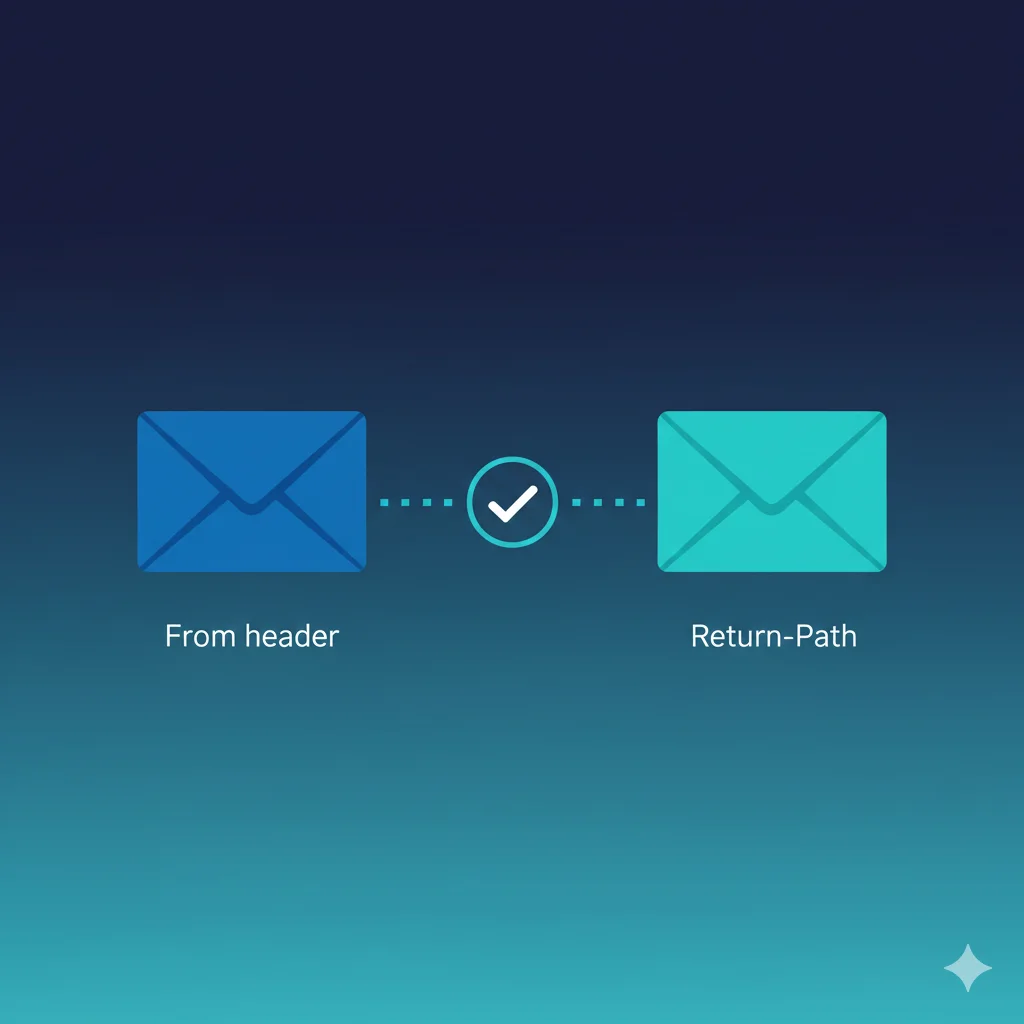
SPF Alignment is the process by which a receiving mail server checks to see if the domain listed in the email's visible "From" address (the one the recipient sees) matches the domain that passed the SPF check. It's one of the two core checks required for an email to pass DMARC.
Understanding SPF Alignment
To understand alignment, you need to look at an email message as having two "From" addresses:
1. The Header From (The Visible Address)
- Location: The address the recipient sees in their email client (e.g., [email protected]).
- Purpose: This is the brand identity and the address that DMARC is protecting.
- DMARC Goal: The domain in this address (yourdomain.com) must align with the domain that passed the SPF check.
2. The Return-Path (The Hidden Address)
- Location: A hidden address in the email header, also called the "Envelope Sender" or "Mail From" address.
- Purpose: This is the address where bounce messages and delivery status notifications are sent. This is the domain that SPF checks.
You can check your current SPF record configuration with our free SPF lookup tool.
The Alignment Rule
SPF Alignment is achieved only when the domain in the Header From address and the domain in the Return-Path address are related in one of two ways:
1. Strict Alignment (Exact Match)
The two domains must be exactly the same.
- Header From Domain: yourdomain.com
- Return-Path Domain: yourdomain.com
2. Relaxed Alignment (Organizational Match)
The two domains must belong to the same organizational domain (i.e., the root domain must match).
- Header From Domain: yourdomain.com
- Return-Path Domain: someservice.yourdomain.com (A subdomain)
If the domain in the Return-Path is NOT the same or a subdomain of the Header From domain, the email will fail SPF Alignment, and therefore FAIL DMARC (even if the SPF check itself passed).
Why is Alignment Required?
SPF itself only validates the hidden Return-Path address. Without the DMARC alignment check, a spammer could do this:
- Send an email using their own server, which passes SPF for their domain (spammer-service.com).
- Put your domain in the visible "From" address ([email protected]).
DMARC stops this loophole. It demands that the domain that passed the technical authentication (SPF) must be the same domain that the recipient sees (the brand domain).
To learn more about DMARC check out our article about DMARC Policies.
Common Issues with SPF Alignment
The Third-Party Sender Mismatch
This is the most frequent cause of SPF Alignment failure. When you use a third-party service (like Mailchimp, Salesforce, or Zendesk) to send emails, that service often needs to use its own domain in the Return-Path (Envelope Sender) address for technical reasons (e.g., to handle bounces).
Scenario: You send an email through a service.
- Header From (Visible): [email protected]
- Return-Path (Hidden): bounces.mailchimp.com (or similar)
The Problem: The two domains (yourdomain.com and mailchimp.com) are not the same and have no organizational relationship.
Result: SPF passes for the third party's domain, but SPF Alignment fails because the Header From domain does not match the Return-Path domain.
Failure to Delegate a Subdomain
To solve the Third-Party Sender Mismatch (Issue 1), the service must be configured to use a subdomain of your domain in the Return-Path. If a sender fails to set this up, alignment will break.
The Fix: You need to follow the service's instructions to delegate a subdomain (e.g., sends.yourdomain.com or mkt.yourdomain.com) to them.
Aligned Scenario:
- Header From (Visible): [email protected]
- Return-Path (Hidden): sends.yourdomain.com
The Problem: If you don't complete the delegation steps, the service defaults back to its own domain (Issue 1).
Misconfigured SPF Record
While not a direct alignment issue, a poorly configured or missing main SPF record will cause the underlying SPF check to fail, which means alignment cannot even be attempted.
The Problem: Your SPF record is missing, or it's missing the IP addresses or include mechanism for a vendor you use. Use our SPF generator to create a properly formatted record with all necessary includes.
Example: You start using a new HR platform to send employee notices but forget to add its include statement to your SPF record. Since the SPF check fails for that sender, the email is not authenticated, and it cannot pass DMARC alignment.
Incorrect SPF Implementation by the Third Party
In some rare cases, the sending platform itself may not support the necessary feature to configure the Return-Path address with your own domain or subdomain.
The Problem: Some legacy or inexpensive third-party services may hardcode their own domain into the Return-Path and offer no customization.
Solution: You have no choice but to rely on DKIM Alignment (the second core DMARC check) for emails from that sender to pass DMARC, or you must switch providers.
How to Fix SPF Alignment?
There are 2 main options to reach SPF alignment:
- Align the Return-Path to your domain (recommended when supported)
- Rely on DKIM alignment when SPF alignment isn't possible
Align the Return-Path to Your Domain
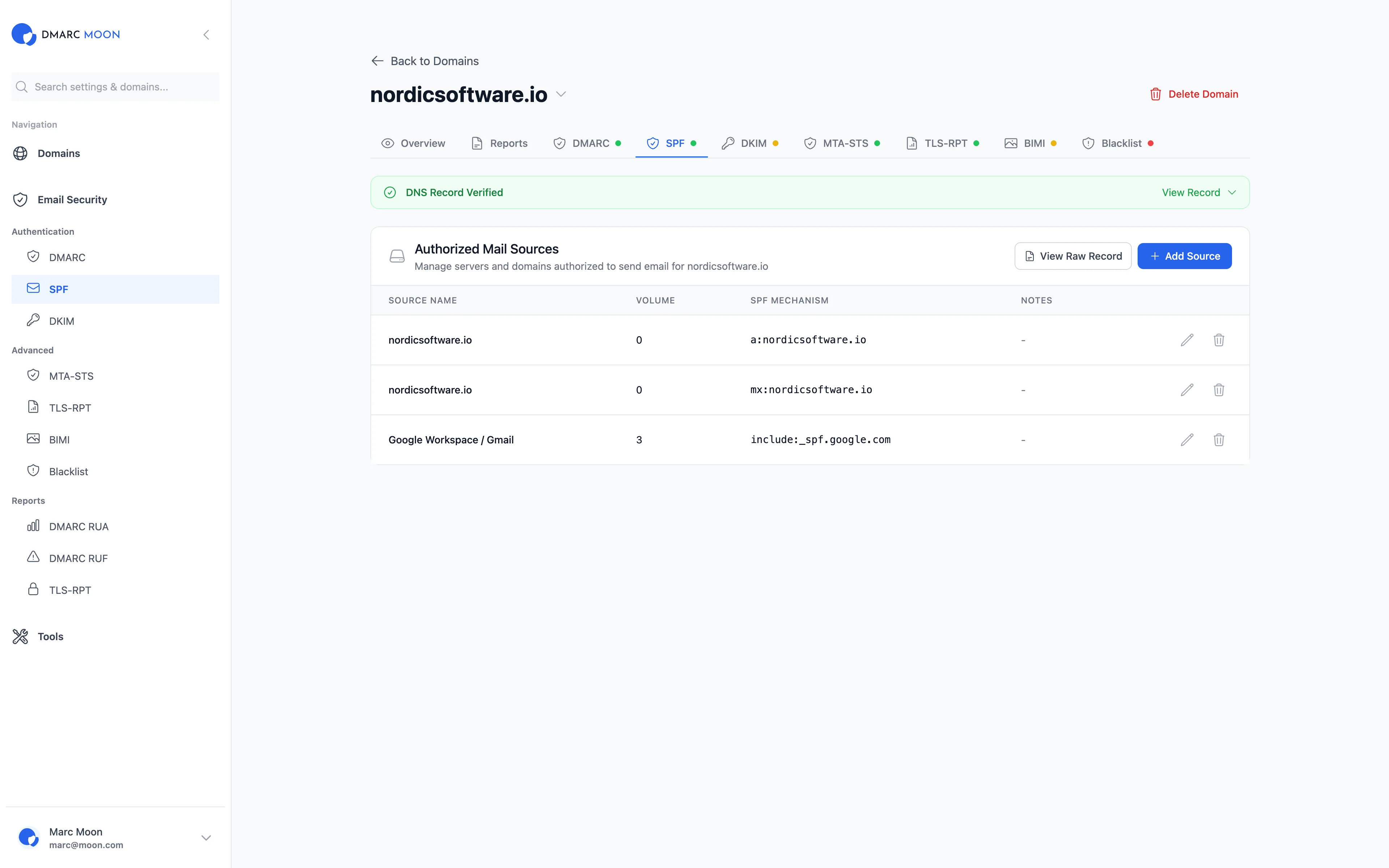
Most platforms let you set up a custom bounce/return-path domain (a.k.a. custom MAIL FROM).
Typically, the pattern is:
- Choose a subdomain you control, e.g. bounces.example.com or rp.example.com.
- Make the CNAME that the sender provides, such as bounces.example.com -> some.vendor.net.
- Maintain your visibility From: as @example.com (or a subdomain of it) so organisational domains match under relaxed alignment.
Rely on DKIM Alignment
Some services don't offer a custom Return-Path. That's fine-DMARC passes if DKIM is aligned. Do this:
- Activate your domain's or subdomain's custom DKIM for the sender.
- Send from the same organisational domain as the DKIM d= domain.
- For hygienic reasons, keep SPF precise, but acknowledge that DKIM will provide alignment.
FAQ
How can I check if my SPF records align correctly with my sending domains?
Checking if your SPF records align correctly with your sending domains is done by analyzing the DMARC Aggregate Reports you receive or by using specialized online DMARC analysis tools like DMARC MOON.
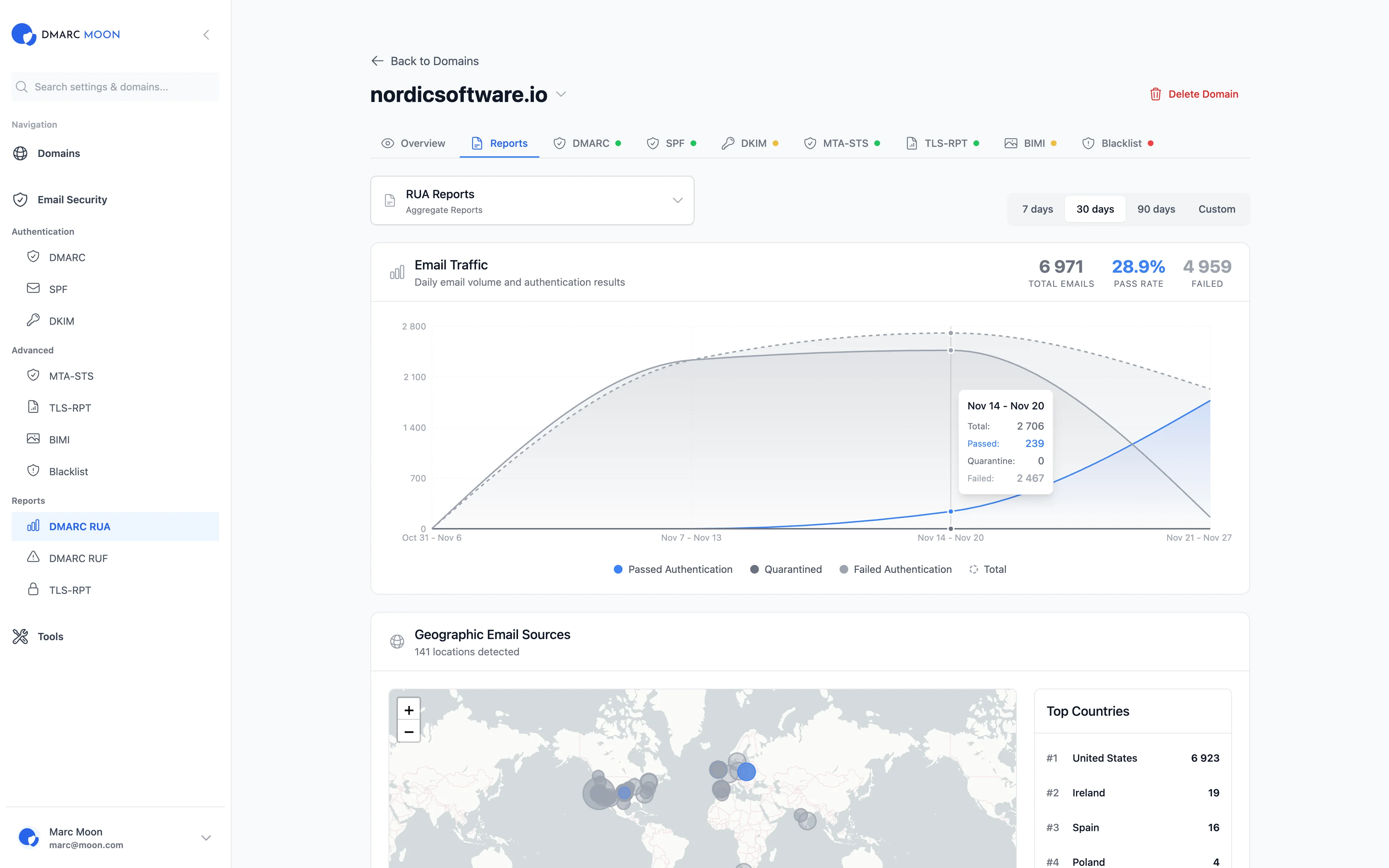
Alignment isn't a check performed on the DNS record itself; it's a verification that happens during email delivery and is reported back to you via DMARC.
Are there any tools available to help monitor and manage SPF alignment issues?
While SPF records themselves are simple TXT records, monitoring and managing SPF Alignment (which is a DMARC function) requires specialized tools to process the reports sent by mailbox providers.
DMARC MOON can help check your SPF alignment. A good starting point is our free SPF lookup tool.
What are the differences between strict and relaxed SPF alignment?
That's a key distinction in DMARC configuration. The difference between Strict and Relaxed SPF alignment determines how permissive a receiving mail server is when comparing the two domains it checks.
This setting is controlled in your DMARC record using the aspf tag, where s is for strict and r is for relaxed. Relaxed (aspf=r) is the default if you don't specify the tag.
The check is always comparing the domain in the Visible "From" Header (what the recipient sees) with the domain in the Return-Path Header (what SPF checks).
What steps should I take to improve my email authentication processes beyond just SPF alignment?
SPF alignment is only one piece of the puzzle. To truly secure your domain and maximize deliverability, you need to build a comprehensive authentication strategy that goes beyond the basics.
Here are the essential steps you should take to improve your email authentication processes beyond just SPF alignment, moving toward full DMARC enforcement and advanced brand protection.
Other points to consider are:
- Setting up DKIM
- Enforce DMARC Policy
- Implement BIMI
- Secure your connection with MTA-STS
That is a lot, but no worry DMARC MOON will walk you through the setup.
How does SPF alignment affect email deliverability?
SPF alignment is absolutely critical to email deliverability, but its effect is not direct; it is entirely tied to the DMARC protocol.
Think of it this way: SPF alignment is a key ingredient, and DMARC is the final product that the receiving server judges. If the ingredient is missing, the whole product fails, and deliverability suffers dramatically.
Here is a breakdown of how SPF alignment affects your ability to reach the inbox:
- DMARC compliance: SPF needs to pass and align with DMARC rule
- SPF is a trust signal that improves your sender's reputation
- SPF Failure is Not Fatal (If DKIM Aligns): In many cases, especially when using third-party email service providers (ESPs), SPF alignment fails because the ESP uses its own domain in the hidden Return-Path.
Improving SPF alignment is a necessary action to ensure you have a robust security foundation and avoid the severe deliverability consequences of DMARC failure.
Do I need both SPF and DKIM aligned?
The concise answer is: No, you do not need both SPF and DKIM aligned for an email to pass DMARC.
However, it is highly recommended to align both whenever possible for maximum redundancy and security.
DMARC is designed to pass an email if at least one of the following two conditions is met:
- SPF passes AND aligns
- DKIM passes AND aligns
Because of this "OR" logic, if your email passes alignment for either SPF or DKIM, it will pass DMARC, and the receiving server will deliver it according to your policy (p=none, p=quarantine, or p=reject).
However, when it comes to security, redundancy is key. So it is good practice to have both DMARC and DKIM aligned with SPF.
Is a separate sending subdomain required?
The short answer is: No, a separate sending subdomain is not strictly required by the DMARC protocol itself, but it is a widely adopted and highly recommended best practice for several reasons, especially when using third-party email service providers (ESPs).
A separate sending subdomain has multiple benefits:
- Isolation and Reputation Protection
- DMARC Alignment for Third-Party Vendors (like HubSpot, SendGrid, etc.)
- Granular Policy Control
Ready to Fix Your SPF Alignment?
DMARC Moon makes SPF alignment monitoring simple. Our platform provides:
- Real-time alignment status monitoring
- Detailed DMARC aggregate report analysis
- Third-party sender identification
- Step-by-step remediation guidance